

Chickens are not picky eaters and often eagerly await the scraps bucket from our kitchens to find tasty morsels. It is essential that owners know what is safe to add to the bucket and specifically what should never be included. I am here to tell you that one of your favorite healthy treats is an absolute no-no for your chickens – avocado.
Avocado tops the list of foods never to give chickens, and with good reason. The skin and pits of these delicious, buttery green fruits are packed with a substance that is toxic for chickens. But don’t worry, humans are perfectly safe, so there is no need to avoid eating avocado yourself. However, you always dispose of the peels and pits where your chickens won’t uncover them.
Why Can’t Chickens Eat Avocado?
To keep chickens healthy, it is recommended to supplement their staple poultry feed with plenty of fresh fruit and vegetables. However, it turns out that not all plant material is healthy or safe for our chickens, and some are downright toxic.
Fortunately, the list of off-limits fruits and veggies is not long, so you won’t have to overanalyze your scraps bucket every time you head outside. Besides avocado, green potato peels, and rhubarb, very few fresh kitchen fresh produce items are specifically toxic to chickens.
Avocado peels and pits contain a fungicidal toxin called persin. Although the substance has adverse reactions in many species of animals, birds are particularly sensitive to its effects. The tree’s leaves and bark also contain high amounts of the toxin, so if you have an avocado tree, it should be fenced off if you keep animals like cattle, horses, or goats.
Persin is concentrated in parts of the avocado plant that humans don’t eat, and the low amount found in the delicious pulp of avocado is not considered harmful. The danger for chickens is that you may add the avocado skins to your kitchen scraps bucket, and avocado peel is very high in this dangerous compound.
What Happens If Chickens Eat Avocado?
The adverse effect that avocado has on chickens depends entirely on how much of the toxic parts they have consumed. Symptoms of avocado poisoning in birds include:
- Difficulty breathing
- Increased heart rate
- Apathy
- Weakness
- Ruffled feathers
- You won’t be able to see this, but persin also damages the myocardial (the heart)l tissue, which means it affects the chicken’s heart muscle.
If chickens eat a lot of persin from avocado, the result is acute respiratory syndrome. This condition will result in death within 24 hours after consumption.
Is Any Part Of An Avocado Safe For Chickens?
The same part of the avocado that you love on your toast is safe for your chickens. In fact, this is the only part of the entire avocado tree that is safe for birds.
Since there is so much room for error with avocados and the consequences of making a mistake are so dire, I suggest just avoiding this fruit entirely as chicken food. There are plenty of other completely safe fruits and veggies you can feed confidently and never have to go back and check if everyone is breathing comfortably.
If you still want to go ahead and share your avocado experience with your chickens, here is what you need to do so that it is perfectly safe:
- The avocado must be fully ripe and mushy. Hard, green avocado flesh also contains a high amount of toxic persin, so it is essential that any avocado you are sharing with your flock is soft and ready to eat.
- Remove the pit and scoop the flesh out of the peel with a spoon. Discard the peels and the pits.
- Put the soft, mushy avocado into a separate bowl to give to the chickens. That way, you can be 100% sure it contains no outer peel, and the mushy avocado won’t get spread around.
- Don’t give your chickens avocado too often, and it must never take the place of a balanced chicken feed. Although the flesh of avocado fruit does have plenty of good fats and vitamins, it shouldn’t be offered to chickens frequently.
What Should I Do If I Accidentally Gave My Chickens Avocado?
First, try not to panic! Check if they actually ate the avocado peels. If they are free range or there was a variety of other vegetables and snacks along with the avocado, they may have eaten their favorites and moved on. Chickens may be called bird-brained, but they often display a 6th sense about what to avoid.
However, if you see that your chickens did eat avocado peels, time is not on your side as the toxin has quite a rapid action. Immediately contact your veterinarian to arrange a callout or pack your chickens and take them to the clinic as an emergency.
If the chickens have eaten a lot of avocado skin, the prognosis may not be good. If you seek treatment quickly, there are some things that your veterinarian can try to do to limit the absorption of the poison.
Can Chickens Eat Guacamole?
Since the toxin persin is concentrated in avocado peel and pits, you may be wondering if you can add leftover guacamole to the scraps bucket to give to your chickens. I don’t recommend this for three reasons:
- Avocados should always be regarded as a possible threat to chickens. Teach your children from an early age that avocado is toxic to chickens and keep it off limits. Rather play it safe than sorry to avoid future accidental poisoning.
- Guacamole contains salt and other spices. Highly salted food should stay out of your chicken coop. Too much salt in a chicken’s diet can cause various problems, including diarrhea which can be pretty nasty for the chicken and the unfortunate person who has to clean the coop.
- Many guacamole recipes include onion. While small amounts of onion are not a problem for chickens, like garlic, strongly flavored foods can come through in the flavor of eggs. Fortunately, the effect is short-lived, so if your chickens have overindulged in your leftover garlic bread, you won’t have to be reminded of it forever!
Are Avocado Trees Poisonous For Chickens?
If your chickens are free-ranging in an area where there are avocado trees, you may be worried that they will ingest bits of leaves or bark. Although you are right to be concerned since all parts of an avocado tree, except the fleshy part of the fruit, contain significant amounts of the toxin persin, it is very unlikely that your chickens will poison themselves if they are roaming freely.
Avocado trees are toxic to most animals, even rats, rabbits, and fish! However, when chickens are outside roaming about freely with plenty of other plants to eat and tasty grubs to scratch for, they are unlikely to head over for a feast of toxic avocado leaves.
It is always a good idea to pick up any dropped fruit from below the trees as chickens may be inquisitive about pecking on anything new. But you don’t need to keep your chickens cooped up or chop down your avocado trees to avoid poisoning.
It is far more likely that animals like goats or horses will tuck into the bark or leaves of your avocado tree than your chickens. If you do keep any livestock besides your clever chickens, it is advisable to put a small fence around your avocado trees to keep them (and your precious avocado trees!) safe from each other.
Conclusion
It is better to avoid feeding avocado to your chickens. The skin and pit of the fruit contain a toxin called persin that can be fatal to all birds. You should enjoy all your avocados without feeling an ounce of guilt about not sharing any with your beloved chickens – bon appétit!
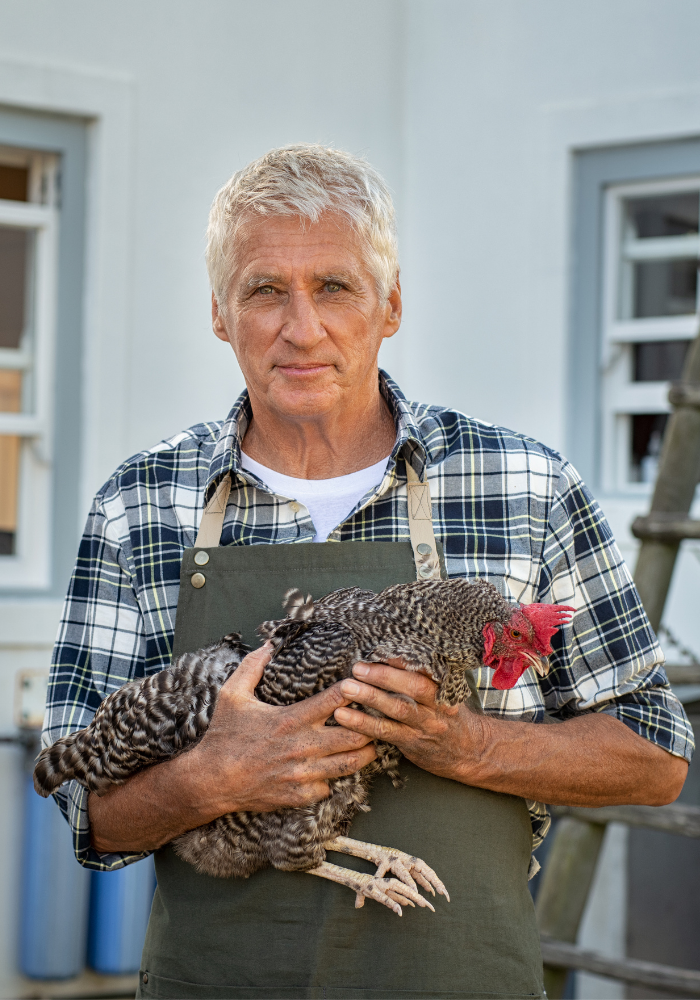
David Cameron is a passionate chicken enthusiast. Growing up, he always wanted to be a veterinarian and loved animals. After graduating from veterinary school, David spent over 40 years as an equine veterinarian. He and his wife retired a few years ago and moved to North Carolina. Here, David’s love of chickens grew even more – he now has 7 chickens and 6 quail. If you have any questions about chickens, feel free to reach out.